
Default [- -]
- EN 1990:2002/A1:2005/AC:2010
Eurocode 0: Basis of structural design
| Article | Commentary |
|---|---|
| A1.1 (1) | NA can give guidance on the design working life of certain buildings. The user has to impose the design life time. The default is set to 50 years. |
| A1.2.1(1) | NA can give guidance on what to do when effects of actions cannot exist simultaneously. No specific implementation in Diamonds. You can set loads incompatible when required. |
| A1.2.2 (Table A1.1) | NA can give guidance on which  -factors to use for buildings. -factors to use for buildings.When no NA is chosen in Diamonds, the -factors from Table A1.1 are used: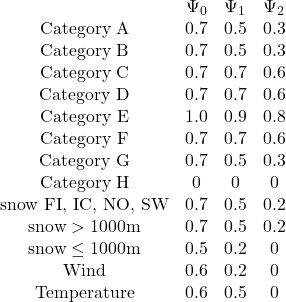 |
| A1.3.1(1) NOTE Annex B | NA can give guidance on how to alter the partial safety factors in Tables A1.2(B) for different reliability levels (consequence classes). When no NA is chosen in Diamonds, the KFI-factors in Table B3 are used. |
| A1.3.1 (Table A1.2(B)) |
|
| A1.3.1(5) NOTE | NA can give guidance on which approach to use when designing structural members (footings, piles, basement walls, …) (STR) involving geotechnical actions and the resistance of the ground (GEO). Only Approach 2 is supported by Diamonds. By consequence, only the values of Table A1.2(B) are implemented in Diamonds. The partial safety factors can manually be adjusted to those in Table A1.2(A) or (C) when needed. |
| A1.3.2 (Table A1.3) | NA can give guidance on which -factor to use in accidental combinations. When no NA is chosen in Diamonds, the user can choose between  or or  to generate the ULS FI combinations. to generate the ULS FI combinations. |
| A1.4.2(2) | NA can give guidance on the serviceability criteria (for example maximum allowed displacement) to be used. Diamonds calculates the horizontale and vertical displacements, but there is no function that will compare the calculated displacements with allowable displacements. That’s something the user must do manually. |
 and
and  values may be set by the National annex.

 (0 where favourable)
 (0 where favourable)
Belgium [BE]
- NBN EN 1990 ANB:2021
| Article | Commentary |
|---|---|
| A1.1 (1) | NA gives guidance, but it’s up to the user to enter the correct value in Diamonds. |
| A1.2.2 (Table A1.1) | 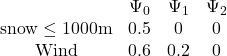 Note (3) under Table A1.1 decribes that whenever a variable load of short term (< 1 month) is combined with another variable load of short term,  . . This is implemented in Diamonds for wind and snow. The effect of is only visible in the generated combinations  , not in the dialog for the Load groups , not in the dialog for the Load groups  . . |
| A1.3.1(1) NOTE Annex B | Allowed. Use default EN. |
| A1.3.1 (Table A1.2(B)) |
|
| A1.3.1(5) NOTE | NA describes to use Approach 1. Not supported by Diamonds. See default. |
| A1.3.2 (Table A1.3) | When the leading variable load is wind, use for the wind and for the other variable loads. When any variable load other than wind is leading, use for the leading load and for the other variable loads.This is implemented in Diamonds. |
Bosnia & Herzegovina [BA]
- BAS EN 1990/NA:2015
| Article | Commentary |
|---|---|
| A1.1 (1) | NA gives guidance, but it’s up to you to enter the correct value in Diamonds. |
| A1.2.2 (Table A1.1) | Use default EN. |
| A1.3.1(1) NOTE Annex B | Annex B is informative. |
| A1.3.1 (Table A1.2(B)) |
|
| A1.3.1(5) NOTE | Use Approach 3 for structural members (footings, strips, plates, basement walls). Not supported by Diamonds. See default. |
| A1.3.2 (Table A1.3) | Use . |
Germany [DE]
- DIN EN 1990/NA: 2009 – 05
| Article | Commentary |
|---|---|
| A1.1 (1) | NA gives guidance, but it’s up to you to enter the correct value in Diamonds. |
| A1.2.2 (Table A1.1) | Note (3) under Table A1.1 decribes that whenever a variable load of short term (< 1 month) is combined with another variable load of short term, . This is implemented in Diamonds for wind and snow. The effect of is only visible in the generated combinations , not in the dialog for the Load groups . |
| A1.3.1(1) NOTE | Allowed. Use default EN. |
| A1.3.1 (Tables A1.2(B)) |
|
| A1.3.1(5) NOTE | Use Approach 1. Only Approach 2 is supported by Diamonds. By consequence, only the values of Table A1.2(B) are implemented in Diamonds by default. The partial safety factors can manually be adjusted to those in Table A1.2(A) or (C). |
| A1.3.2 (Table A1.3) | Use . |
Denmark [DK]
- DS/ EN 1990 DK NA: 2013 Version 2
| Article | Commentary |
|---|---|
| A1.1 (1) | Use default EN. |
| A1.2.2 (Table A1.1) | 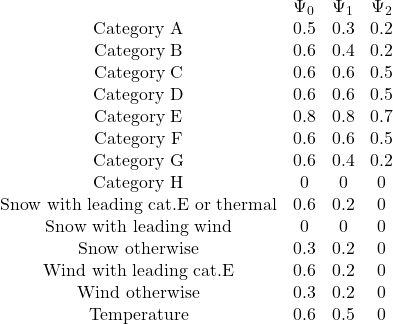 |
| A1.3.1(1) NOTE | Allowed. Use default EN. |
| A1.3.1 (Table A1.2(B)) |
|
| A1.3.1(5) NOTE | Use Approach 1. Only Approach 2 is supported by Diamonds. By consequence, only the values of Table A1.2(B) are implemented in Diamonds by default. The partial safety factors can manually be adjusted to those in Table A1.2(A) or (C). |
| A1.3.2 (Table A1.3) | Use . |
France [FR]
- NF EN 1990/NA: 2011
| Article | Commentary |
|---|---|
| A1.1 (1) | NA gives guidance, but it’s up to you to enter the correct value in Diamonds. |
| A1.2.2 (Table A1.1) |
|
| A1.3.1(1) NOTE | No national advise given on this article. NA specifically mentions that Annex B remains informative. |
| A1.3.1 (Table A1.2(B)) |
|
| A1.3.1(5) NOTE | Use Approach 1. Only Approach 2 is supported by Diamonds. By consequence, only the values of Table A1.2(B) are implemented in Diamonds by default. The partial safety factors can manually be adjusted to those in Table A1.2(A) or (C). |
| A1.3.2 (Table A1.3) | Use . |
Great Britain [GB]
- BS EN 1990: 2002 + A1:2005
| Article | Commentary |
|---|---|
| A1.1 (1) | NA gives guidance, but it’s up to you to enter the correct value in Diamonds. |
| A1.2.2 (Table A1.1) | Note (3) under Table A1.1 decribes that whenever a variable load of short term (< 1 month) is combined with another variable load of short term, . This is implemented in Diamonds for wind and snow. The effect of is only visible in the generated combinations , not in the dialog for the Load groups . |
| A1.3.1(1) NOTE | Allowed. Use default EN. |
| A1.3.1 (Table A1.2(B)) |
|
| A1.3.1(5) NOTE | Use Approach 1. Only Approach 2 is supported by Diamonds. By consequence, only the values of Table A1.2(B) are implemented in Diamonds by default. The partial safety factors can manually be adjusted to those in Table A1.2(A) or (C). |
| A1.3.2 (Table A1.3) | Use . |

Croatia [HR]
- HRN EN 1990:2011/NA:2011
| Article | Commentary |
|---|---|
| A1.1 (1) | NA gives guidance, but it’s up to you to enter the correct value in Diamonds. |
| A1.2.2 (Table A1.1) | Use default EN. |
| A1.3.1(1) NOTE | No national advise given on this article. |
| A1.3.1 (Table A1.2(B)) |
|
| A1.3.1(5) NOTE | Use Approach 3. Design methods 2 and 3 are used for the design of axially loaded piles and anchors. Only Approach 2 is supported by Diamonds. By consequence, only the values of Table A1.2(B) are implemented in Diamonds by default. The partial safety factors can manually be adjusted to those in Table A1.2(A) or (C). |
| A1.3.2 (Table A1.3) | Use . |
Lithuania [LT]
- LST EN 1990: 2004/ NA:2010
| Article | Commentary |
|---|---|
| A1.1 (1) | NA gives guidance, but it’s up to you to enter the correct value in Diamonds. |
| A1.2.2 (Table A1.1) | Use the combination factors belonging to “Snow > 1000m”. For all other load groups, use default EN. |
| A1.3.1(1) NOTE | No national advise given. |
| A1.3.1 (Table A1.2(B)) |
|
| A1.3.1(5) NOTE | The NA doens’t give a preferred approach. |
| A1.3.2 (Table A1.3) | Use default EN. |
 (0 where favourable)
 (0 where favourable)
Luxemburg [LU]
- EN 1990:2002 + A1:2005
| Article | Commentary |
|---|---|
| A1.1 (1) | Use default EN. |
| A1.2.2 (Table A1.1) | Use default EN, but whenever a variable load of short term (< 1 month) is combined with another variable load of short term, . This is implemented in Diamonds for wind and snow. The effect of is only visible in the generated combinations , not in the dialog for the Load groups . |
| A1.3.1(1) NOTE | Allowed. Use default EN. |
| A1.3.1 (Table A1.2(B)) |
|
| A1.3.1(5) NOTE | Use Approach 2. |
| A1.3.2 (Table A1.3) | When the leading variable load is wind, use for the wind and for the other variable loads. When any variable load other than wind is leading, use for the leading load and for the other variable loads. |
Montenegro [ME]
- MEST EN 1990:2013/NA:2013
| Article | Commentary |
|---|---|
| A1.1 (1) | NA gives guidance, but it’s up to you to enter the correct value in Diamonds. |
| A1.2.2 (Table A1.1) | Use default EN. |
| A1.3.1(1) NOTE | Allowed. Use default EN. |
| A1.3.1 (Table A1.2(B)) |
|
| A1.3.1(5) NOTE | Use Approach 1 & 3. Only Approach 2 is supported by Diamonds. By consequence, only the values of Table A1.2(B) are implemented in Diamonds by default. The partial safety factors can manually be adjusted to those in Table A1.2(A) or (C). |
| A1.3.2 (Table A1.3) | Use . |
the Netherlands [NL]
- NEN EN 1990+A1+A1/C2:2011/NB:2011
| Article | Commentary |
|---|---|
| A1.1 (1) | For variable distributed loads on floors, the extreme value may be adjusted to the design working time according to: This is implemented in Diamonds by adjusting the partial safety factors for Live loads A. |
| A1.2.2 (Table A1.1) |  |
| A1.3.1(1) NOTE | Allowed. Use default EN. |
| A1.3.1(1) (Table A1.2(B)) |
|
| A1.3.1(5) NOTE | Use Approach 3. Only Approach 2 is supported by Diamonds. By consequence, only the values of Table A1.2(B) are implemented in Diamonds by default. The partial safety factors can manually be adjusted to those in Table A1.2(A) or (C). |
| A1.3.2 (Table A1.3) | Use for ULS FI and ULS SC. |

Norway [NO]
- NS EN 1990:2002/ NA: 2008 + A1:2010
| Article | Commentary |
|---|---|
| A1.1 (1) | Use default EN. |
| A1.2.2 (Table A1.1) |  equals 0.6 for wind loads by default, but may be adjusted for different geographical areas by local authorities. But no further directions are given. equals 0.6 for wind loads by default, but may be adjusted for different geographical areas by local authorities. But no further directions are given. The default EN-values are implemented for the Norwegian national annex. |
| A1.3.1(1) NOTE | Allowed. Use default EN. |
| A1.3.1 (Table A1.2(B)) |
|
| A1.3.1(5) NOTE | Use Approach 2 & 3. Only Approach 2 is supported by Diamonds. By consequence, only the values of Table A1.2(B) are implemented in Diamonds by default. The partial safety factors can manually be adjusted to those in Table A1.2(A) or (C). |
| A1.3.2 (Table A1.3) | When the leading variable load is wind, use for the wind and for the other variable loads. When any variable load, other than wind, is leading, use for all variable loads. |
Poland [PL]
- PN EN 1990:2004/ NA:2010
| Article | Commentary |
|---|---|
| A1.1 (1) | Use default EN. |
| A1.2.2 (Table A1.1) | Use default EN. |
| A1.3.1(1) NOTE | Use default EN. |
| A1.3.1 (Table A1.2(B)) |
|
| A1.3.1(5) NOTE | Use Approach 2. |
| A1.3.2 (Table A1.3) | Use default EN. |
Sweden [SE]
- BFS 2015:6 EKS 10
| Article | Commentary |
|---|---|
| A1.1 (1) | Use default EN. |
| A1.2.2 (Table A1.1) | 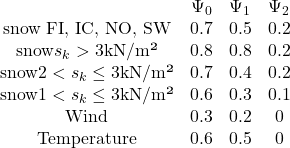 |
| A1.3.1(1) NOTE | Allowed. But according to Article 14 with the following  -factors: -factors:
|
| A1.3.1 (Table A1.2(B)) |
|
| A1.3.1(5) NOTE | Use Approach 2 & 3. Only Approach 2 is supported by Diamonds. By consequence, only the values of Table A1.2(B) are implemented in Diamonds by default. The partial safety factors can manually be adjusted to those in Table A1.2(A) or (C). |
| A1.3.2 (Table A1.3) | Use . |


Romania [RO]
- SR EN 1990:2004/NA:2006
| Article | Commentary |
|---|---|
| A1.1 (1) | NA gives guidance, but it’s up to you to enter the correct value in Diamonds. |
| A1.2.2 (Table A1.1) |  |
| A1.3.1(1) NOTE | Allowed. Use default EN. |
| A1.3.1(1) (Table A1.2(B)) |
|
| A1.3.1(5) NOTE | See SR EN 1997-1:2004 |
| A1.3.2 (Table A1.3) | Use . |
Serbia [RS]
- SRPS EN 1990/NA:2012/1:2020
| Article | Commentary |
|---|---|
| A1.1 (1) | NA gives guidance, but it’s up to you to enter the correct value in Diamonds. |
| A1.2.2 (Table A1.1) | Use default EN. |
| A1.3.1(1) NOTE | No national advise given on this article. NA specifically mentions that Annex B remains informative. |
| A1.3.1 Table A1.2(B) |
|
| A1.3.1(5) NOTE | Use Approach 1 & 3. Only Approach 2 is supported by Diamonds. By consequence, only the values of Table A1.2(B) are implemented in Diamonds by default. The partial safety factors can manually be adjusted to those in Table A1.2(A) or (C). |
| A1.3.2 (Table A1.3) | Use for ULS FI. Use for ULS SC. |